A well-organized kitchen isn’t just about aesthetics—it’s about making everyday life smoother, faster, and more enjoyable. If you’re searching for practical, realistic ways to reduce clutter, maximize space, and bring order to your cooking routine, this guide to kitchen organization hacks is designed with exactly that goal in mind. From smart storage solutions to layout-enhancing tweaks, we’ll walk through ideas that help you create a kitchen that works for you, not against you.
Many homeowners struggle with overcrowded cabinets, messy drawers, and wasted counter space. This article breaks down simple, actionable strategies that address those common pain points while enhancing both function and style. Each recommendation is grounded in proven interior styling principles and practical setup techniques used by experienced home design experts, ensuring the advice is both beautiful and realistic to implement.
By the end, you’ll have clear, effective solutions you can apply immediately—whether you’re working with a compact apartment kitchen or a spacious open-concept layout.
From Chaos to Calm
A disorganized kitchen wastes time, elevates stress, and turns cooking into a chore. Researchers at UCLA found cluttered homes raise cortisol levels, especially in kitchens. The solution is systematic design, not random tidying. This guide shows you how to declutter effectively, build logical zones, and apply smart storage that lasts. Interior design workflow principles—like the classic work triangle—prove that strategic layout reduces unnecessary steps and boosts efficiency. By applying practical kitchen organization hacks and evidence-based zoning, you create a kitchen that works for you, not against you, every single day. Function follows thoughtful, proven structure consistently.
The Foundation: A Ruthless Declutter for a Fresh Start
First things first, pull everything out. Yes—everything. Choose one cabinet or drawer at a time and empty it completely. This “Everything Out” method works because seeing every item at once forces clarity (and sometimes shock). Suddenly, those five spatulas and the mystery gadget from 2014 are impossible to ignore.
Next, categorize and conquer. Use three boxes: Keep, Donate/Sell, and Trash. Keep only what you use regularly or genuinely love. Donate or sell items in good condition that no longer serve you. Trash anything broken, expired, or beyond repair. If you’re unsure, apply the One-Year Rule: if you haven’t used a gadget, utensil, or appliance in the past year, it’s likely clutter. Seasonal tools are the exception—your holiday roasting pan gets a pass.
Before returning a single item, wipe and reset. Clean the empty shelves and drawers thoroughly. This step creates a psychological “fresh start” effect, making you less likely to re-clutter (research from UCLA’s Center on Everyday Lives of Families links clutter to increased stress levels).
Finally, return only the Keep items, grouping by function. These small kitchen organization hacks build momentum—and suddenly, your space works for you, not against you.
The Zoning Strategy: Arranging Your Kitchen for a Natural Workflow
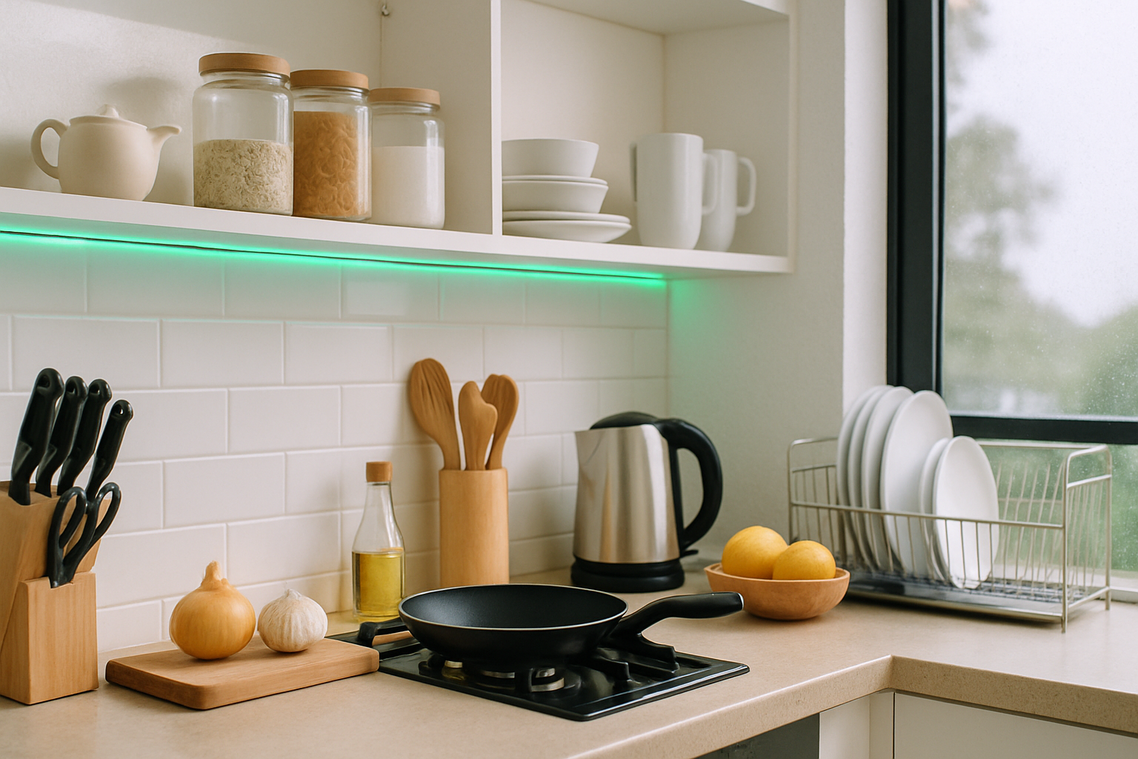
At its core, zoning means grouping similar items together based on function to create mini-workstations within your kitchen. Instead of organizing by category alone (all utensils here, all appliances there), you organize by activity. The result? A kitchen that flows as naturally as a well-rehearsed cooking show segment—minus the camera crew.
What many guides miss, however, is that zoning isn’t just about convenience. It reduces cognitive load—the mental effort required to complete a task. Research in environmental psychology shows that streamlined environments improve task efficiency and reduce stress (Journal of Environmental Psychology, 2011). In other words, less searching, more cooking.
The Five Essential Kitchen Zones
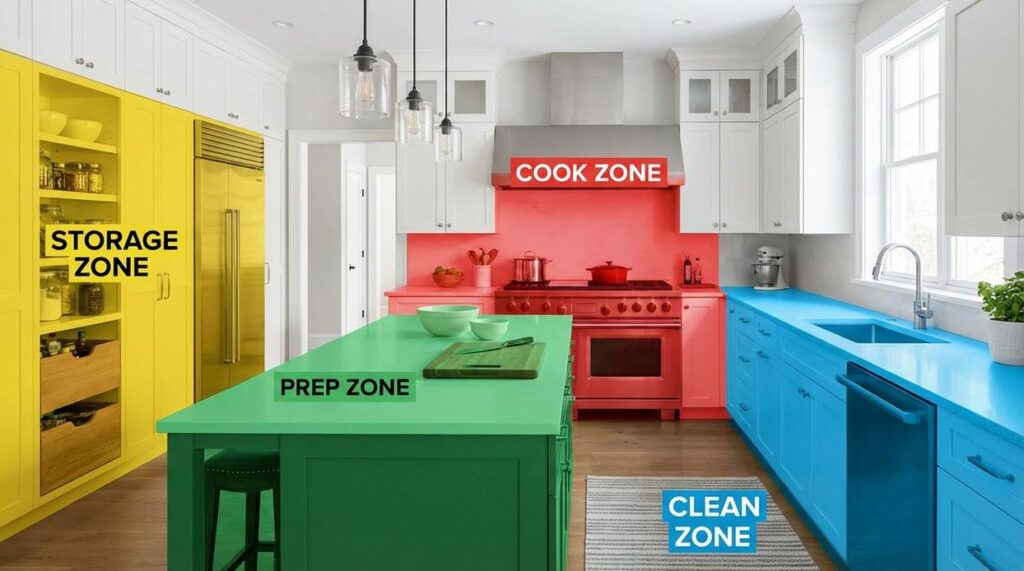
The Prep Zone
First, position knives, cutting boards, mixing bowls, and measuring cups near your largest stretch of clear counter space. This becomes your primary action station. If you constantly pivot across the kitchen to grab tools, your layout—not your skills—is slowing you down.
The Cooking Zone
Next, store pots, pans, utensils, spices, and oils immediately beside the stove and oven. Pro tip: keep heat-safe utensils in a vertical container near the cooktop for true grab-and-go efficiency.
The Consumables Zone
Then, group pantry dry goods, canned items, snacks, and refrigerated ingredients in close proximity. While some argue food should be stored wherever space allows, consolidating consumables simplifies meal planning and grocery tracking (and prevents buying your fifth paprika jar).
The Cleaning Zone
Place dish soap, sponges, dishwasher pods, and trash bags under or near the sink. This centralizes mess management—because spills wait for no one.
The Daily Use Zone
Finally, keep everyday dishes, glasses, and cutlery near the dishwasher. Unloading becomes a single smooth motion instead of a scavenger hunt.
These subtle yet strategic kitchen organization hacks go beyond aesthetics. They create rhythm, reduce friction, and turn your kitchen into a space that works with you—not against you.
Small kitchens don’t need miracles; they need smarter math. Instead of cramming more into cabinets, compare vertical space vs. horizontal clutter. When you Go Vertical, shelf risers and stacking shelves effectively double height in tall cabinets. A single riser turns one shaky pile of plates into two tiers (no more porcelain Jenga). Pro tip: measure cabinet clearance before buying risers to avoid wasted inches.
Next, consider chaos vs. control in drawers. Adjustable dividers let you Divide and Conquer by assigning zones for utensils, gadgets, even spice jars. Without dividers, tools migrate and tangle; with them, everything has a boundary and a home. According to experts at The Spruce, compartmentalized storage reduces time spent searching for items, which adds up over weeks.
Corners are another A vs. B scenario: forgotten dead space or functional storage. A Lazy Susan transforms awkward cabinets into rotating access points, bringing back-row oils and condiments forward with a spin. It’s the difference between digging blindly and browsing like you’re flipping vinyl records.
Visibility also matters. Original packaging vs. clear, airtight containers is no contest. Decanting flour, pasta, and rice into stackable bins improves freshness and lets you see inventory. The USDA notes airtight storage helps protect dry goods from moisture and pests.
Finally, think outside the cabinet. Drawer storage vs. wall-mounted magnetic knife strips or pot racks? Mounting frees space while turning tools into décor. These kitchen organization hacks pair perfectly with a step by step guide to setting up a guest bedroom for whole-home flow.
Maintaining Order: Simple Habits for a Permanently Tidy Kitchen
Clutter creeps in when small decisions go unchecked. Start with the One-In, One-Out rule: buy a new gadget, donate or toss one you rarely use. It keeps cabinets breathable. Next, set a five-minute timer each night. Wipe counters, load the dishwasher, and return stray items home. Finally, clean as you go: wash knives while sauce simmers, stash spices before baking. These kitchen organization hacks prevent marathon scrubbing. Pro tip: keep a small donation box in a pantry corner for instant decluttering. Consistency beats occasional deep cleans. Small habits create lasting calm.
Remember the chaos of digging through cluttered drawers just to find a spatula? I’ve been there, staring at a messy counter before dinner guests arrived. But once I embraced decluttering, zoning, and smart daily habits, everything changed. Start small tonight—organize one drawer and test simple kitchen organization hacks for momentum.
Bring Order and Style Back to Your Kitchen
You started this guide looking for practical ways to make your kitchen feel less chaotic and more functional. Now you have clear, actionable strategies you can apply immediately — from smarter storage solutions to layout adjustments that actually support your daily routine.
A cluttered, disorganized kitchen doesn’t just waste space — it wastes time, energy, and patience. When cabinets are overflowing and countertops are crowded, even simple meals feel stressful. By applying these kitchen organization hacks, you’re not just tidying up — you’re creating a space that works for you instead of against you.
Now it’s time to take action. Choose one problem area in your kitchen today and implement a solution from this guide. Then build momentum from there.
If you’re ready for a kitchen that feels streamlined, stylish, and stress-free, explore more expert-backed ideas and step-by-step solutions designed to simplify your space. Discover proven concepts trusted by homeowners who want smarter setups — and start transforming your kitchen now.