
If you’re searching for ways to embrace curated maximalism decor without turning your space into visual chaos, you’re in the right place. This article is designed to help you understand how to layer color, pattern, texture, and meaningful pieces in a way that feels intentional rather than overwhelming. Instead of generic decorating advice, you’ll find clear guidance on how to balance bold expression with thoughtful arrangement, so every item in your home feels chosen—not cluttered.
We’ve analyzed leading interior styling approaches, current design movements, and real-world room transformations to break down what truly makes this style work. From selecting statement pieces to creating cohesion across diverse elements, you’ll discover practical strategies you can apply immediately. Whether you’re refreshing a single room or redefining your entire home aesthetic, this guide will help you confidently design a space that feels layered, personal, and expertly pulled together.
The Foundation: Anchoring Your Eclectic Vision
Let’s challenge a popular myth right away: eclectic design is not creative chaos. It’s not “throw everything you love into a room and hope for magic.” In reality, the most compelling eclectic spaces are grounded in what designers call an anchor style—a dominant aesthetic that quietly runs the show.
An anchor style is the primary design language of a room. Think Mid-Century Modern (clean lines, walnut tones), Industrial (exposed metal, raw textures), or Scandinavian (light woods, airy neutrals). This foundation keeps the space cohesive. Without it, things can feel more flea market than thoughtfully layered (and not in a cool way).
Here’s where the 80/20 principle comes in. Roughly 80% of your core elements—sofa, wall color, flooring, large furniture—should align with your anchor style. The remaining 20%? That’s your playground. Accent chairs, art, lighting, and textiles introduce contrast and personality.
For example, a Scandinavian living room with pale oak floors and a neutral linen sofa creates a calm base. From there, you might layer bohemian textiles, industrial pendant lighting, and antique artwork. Suddenly, the room feels collected, not cluttered.
Some argue true eclecticism needs no rules. I disagree. Structure actually unlocks freedom—much like curated maximalism decor thrives on intentional editing. Pro tip: if everything shouts, nothing stands out.
Creating Cohesion: The Unifying Threads of Eclectic Style
Eclectic style gets a bad rap. Critics say it’s just organized chaos—a polite way of admitting you couldn’t pick a lane. But true cohesion isn’t about matching; it’s about intentional repetition.
The Power of a Consistent Color Palette
A limited, repeated color scheme acts like visual glue. Imagine emerald green appearing in a modern throw pillow, a vintage Persian rug, and a contemporary art print. Different eras, same accent. Designers call this color continuity—the practice of repeating hues to create harmony across varied pieces. Studies in environmental psychology show cohesive color palettes can make spaces feel calmer and more unified (Journal of Environmental Psychology, 2015).
If you’re wondering what to choose, start with:
- One dominant neutral
- One secondary support color
- One bold accent
(Pro tip: Pull your accent from existing artwork to avoid guesswork.)
Repetition of Texture and Material
Texture is the quiet hero. Velvet pillows, a velvet ottoman, maybe even velvet trim—suddenly the room hums with rhythm. The same goes for brass hardware or dark wood finishes. This repetition creates what designers call material resonance. Even curated maximalism decor relies on this subtle echo to feel elevated rather than cluttered.
Mind the Scale and Proportion
A large antique mirror can absolutely pair with a sleek console—if their proportions balance. Visual weight matters more than style label. (Think Batman and Robin: contrast, but complementary.)
Establishing a Clear Focal Point
Choose one anchor—a bold artwork or sculptural fireplace. Without it, the eye wanders and tires.
What’s next? Step back and edit. Ask: does each piece support the palette, texture, scale, or focal point? If not, reconsider. Cohesion isn’t restriction—it’s curation.
Curating Your Collection: Sourcing and Layering with Intent
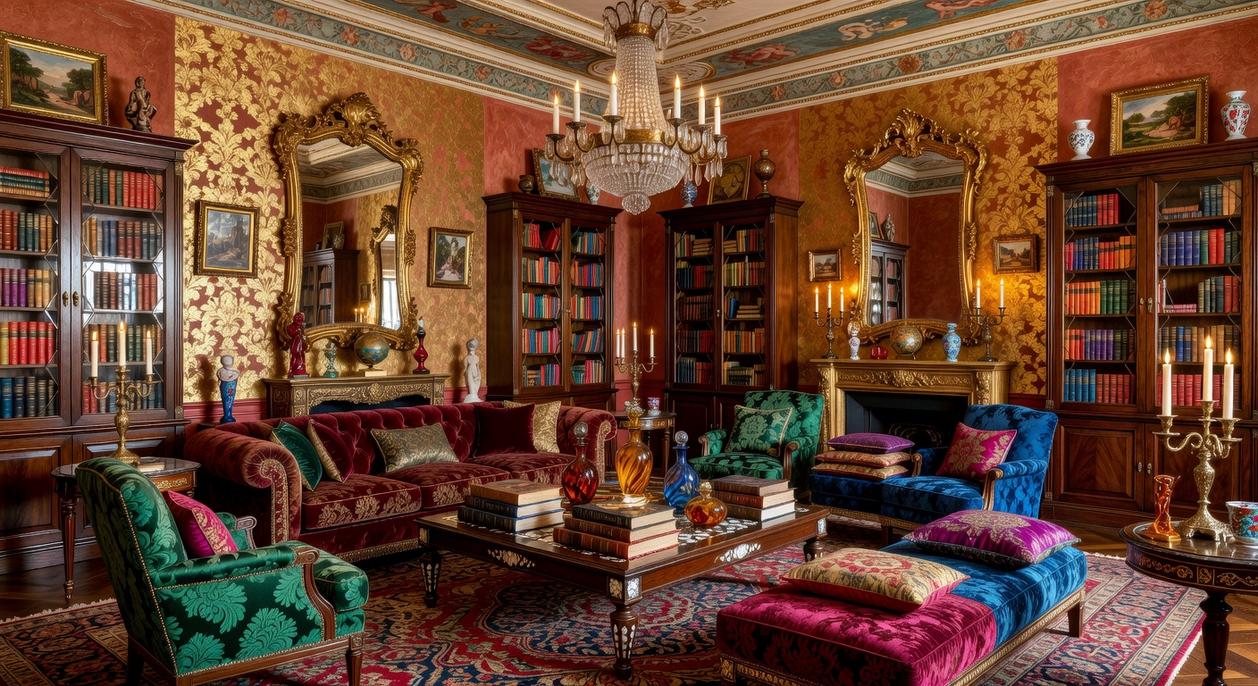
First, let’s define investment pieces—high-quality items designed to last for decades, both structurally and stylistically. Think a solid wood dining table or a handcrafted wool rug. Now contrast that with accessible finds—budget-friendly treasures from flea markets, thrift stores, or even big-box retailers. Mixing high and low isn’t just practical; it creates visual tension. For example, a designer sofa paired with a $40 vintage side table instantly feels more dynamic (and far less showroom-staged).
However, some argue that blending price points cheapens a space. In reality, the opposite is true. The contrast adds depth and authenticity—an approach central to curated maximalism decor. It’s the difference between a catalog spread and a home with a pulse.
Next, blend old and new. Picture a contemporary sculpture resting on an antique chest of drawers. Or a sleek, modern dining table surrounded by timeworn vintage chairs. This juxtaposition introduces temporal layering—a design concept that reflects different eras coexisting harmoniously. While minimalists may prefer uniformity, layered timelines tell a richer story.
Equally important, incorporate personal items. Travel souvenirs, inherited ceramics, or your own art collection transform a room into a narrative. (If your space could belong to anyone, it probably says nothing about you.)
Finally, master the art of layering. Layer rugs by placing a smaller patterned rug over a neutral base. Mix pillow textures—linen, velvet, boucle—for tactile contrast. Create gallery walls with varied frames and mediums for rhythm. For those drawn to contrast-driven styling, explore bold and dramatic interiors how to embrace high contrast design. Pro tip: step back frequently—layering works best when you edit as thoughtfully as you add.
The Fine Line: Expert Tips for Avoiding Clutter
First, embrace negative space. Empty space isn’t wasted space; it’s a design element that lets statement pieces breathe. Back in 2020, after months of staring at overcrowded shelves during lockdown, many homeowners realized less really did feel calmer.
Next, practice the art of editing. Every season, set aside an hour to reassess what’s on display. Rotate meaningful items—store some, spotlight others. (Yes, even the souvenir mug collection.)
Finally, group similar objects. A cluster of blue ceramics reads intentional, especially within curated maximalism decor, rather than scattered and visually noisy arrangements.
Bring Your Vision to Life with curated maximalism decor
You came here looking for clarity on how to embrace bold style without creating chaos — and now you have the roadmap. You understand how to layer color, mix patterns, showcase meaningful pieces, and create a space that feels expressive yet intentional.
The real frustration with maximalism is not knowing where to start or how to keep it from feeling overwhelming. With the right structure and thoughtful curation, your home can feel vibrant, personal, and beautifully cohesive instead of cluttered.
Now it’s time to take action. Start by selecting one room, define your color story, and build around statement pieces that reflect your personality. If you want expertly curated ideas, practical styling breakdowns, and proven decor concepts that actually work, explore our latest guides and inspiration resources today. Thousands of design enthusiasts trust our insights to transform their spaces with confidence — and you can too.
Don’t let uncertainty hold back your creativity. Start designing your bold, expressive space now.