
If you’re searching for smart solutions to make the most of limited square footage, you’re in the right place. This guide is designed to help you master small apartment furniture placement so your space feels open, functional, and intentionally styled—not cramped or chaotic. Whether you’re working with a studio layout or a compact one-bedroom, the right arrangement can completely transform how your home looks and feels.
We’ve analyzed proven interior styling principles, space-planning techniques, and real-world layout strategies to bring you practical, easy-to-apply advice. Instead of generic tips, you’ll find thoughtful breakdowns that explain why certain placements work, how to create flow, and how to balance comfort with visual appeal.
By the end of this article, you’ll know how to position key pieces, define zones without walls, and maximize every inch of your apartment with confidence and clarity.
Feeling boxed in by your own living room is frustrating. When every chair seems to block a walkway and storage spills into sightlines, small spaces feel smaller than they are. This guide delivers actionable, step-by-step strategies to maximize flow, function, and perceived space. You’ll learn how to transform cluttered corners into comfortable, efficient zones using proven styling principles tailored to real-world homes.
Unlike generic advice, we address overlooked details competitors skip:
- Sightline mapping before moving furniture
- Vertical zoning to reclaim dead wall space
- Multi-functional swaps that support small apartment furniture placement
Follow steps, and room won’t look bigger—it’ll live bigger.
The Foundation: Measure, Plan, and Prioritize
First things first, measure everything. That means wall-to-wall dimensions, ceiling height, window widths, door swings, and even outlet placement. Precision matters because a sofa that’s “about six feet” can easily become a daily obstacle (and a bruised-shin magnet). Write the numbers down and double-check them.
Next, sketch a simple floor plan. You can use graph paper or a free online room planner to test layouts before lifting a single chair. This step alone can save hours of frustration. In fact, small apartment furniture placement becomes far easier when you can see proportions clearly.
Then, create zones. Even one room can have distinct areas for lounging, working, or dining. Rugs, lighting, and furniture orientation help define these spaces without adding clutter.
Finally, identify your “hero” pieces—the non-negotiables. Keep what anchors the room and remove or replace anything that crowds it. When in doubt, prioritize function first and aesthetics second.
Positioning Your Anchor: Where to Place Your Largest Piece
Let’s start with the piece that causes the most frustration: the sofa. It’s bulky, heavy, and somehow always in the wrong spot after you’ve shoved it around three times. That’s because the largest seating element is the room’s anchor—the foundational piece that dictates where everything else goes. If it’s off, the whole room feels off (and no one enjoys an accidental shin-to-coffee-table collision).
The primary rule is simple: place the anchor against the longest, uninterrupted wall. This maximizes open floor space and instantly makes the layout feel intentional rather than cramped. Especially in small apartment furniture placement, this strategy can mean the difference between airy and overcrowded.
However, some argue that pushing everything against walls makes a room feel stiff. Fair point. Floating the sofa—positioning it away from the wall—can create a defined walkway or subtly divide an open-concept space. Similarly, placing it under a large window frames the view beautifully and adds balance.
That said, traffic flow is non-negotiable. Always leave 30–36 inches for clear pathways (designers widely recommend this standard for comfortable circulation). Without it, your living room turns into an obstacle course. And honestly, no one wants to sidestep furniture just to sit down.
Creating Visual Space: Tricks to Make the Room Feel Bigger
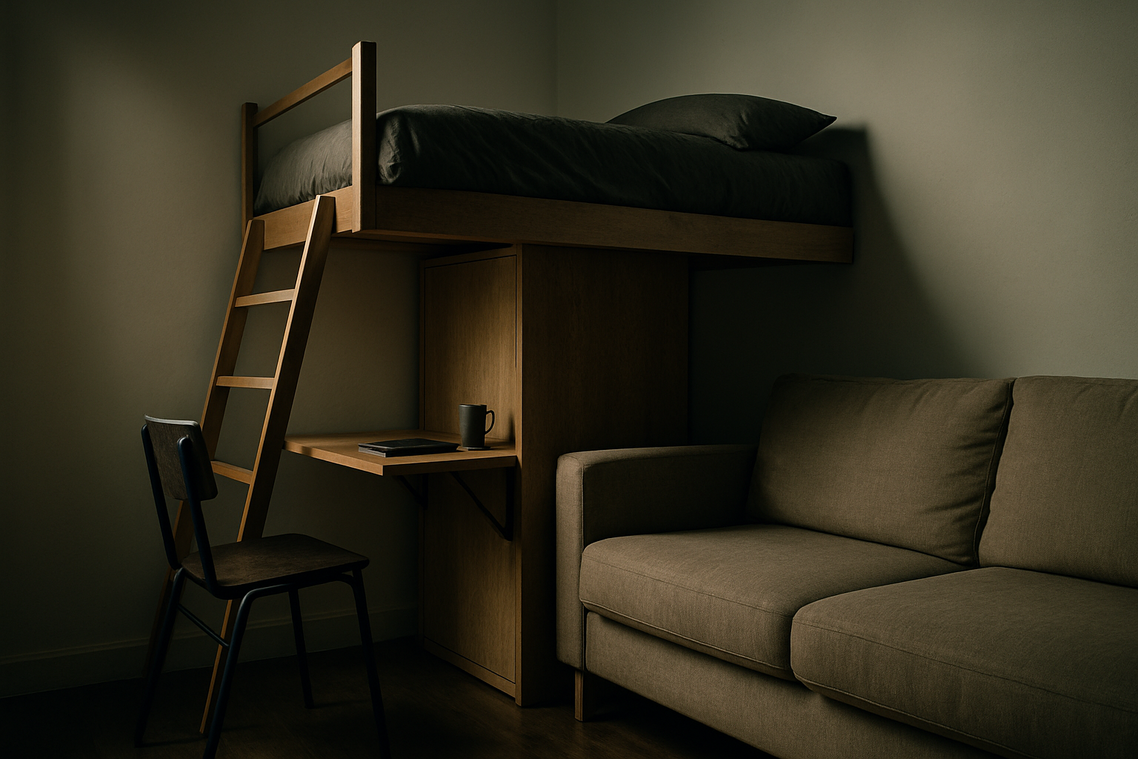
I learned the hard way that filling every inch of a room doesn’t make it feel complete—it makes it feel cramped. In my first small space, I pushed bulky furniture against every wall and wondered why it felt like a storage unit instead of a home. The fix wasn’t more decor. It was smarter visual strategy.
Go Vertical
When floor space is limited, build upward. Tall, narrow bookshelves and vertical wall art pull the eye toward the ceiling, creating the illusion of height. Interior designers call this vertical emphasis—a technique that visually stretches a room. (Think of how skyscrapers dominate a skyline.)
Choose “Leggy” Furniture
Furniture with visible legs allows light and sightlines to pass underneath. That extra glimpse of flooring creates a sense of openness. I once swapped a bulky sofa for one on tapered legs, and the room instantly felt LESS HEAVY. It’s a subtle trick, but it works.
The Power of Mirrors
Place a large mirror opposite a window to reflect natural light and add depth. This taps into perceived spatial extension—your brain reads reflection as additional space. Pro tip: keep the reflection uncluttered for maximum effect.
Use Transparent Materials
Glass or acrylic tables reduce visual weight. Because they don’t block sightlines, they minimize clutter—even if the layout stays the same.
Respect Scale
Oversized furniture is the fastest way to overwhelm a room. I ignored this once. BIG mistake. Proper scale is critical, especially in small apartment furniture placement.
For workspace-specific tips, see this home office setup guide for productivity and comfort.
Sometimes making a room feel bigger isn’t about adding more—it’s about removing what blocks the view.
Your Secret Weapon: The Power of Multi-Functional Furniture
If you’ve ever stubbed your toe on a side table you barely use, you already know the frustration. In a compact home, every inch matters—and yet somehow clutter multiplies overnight (like socks in a dryer). That’s where multi-functional furniture becomes your secret weapon.
Take a storage ottoman that doubles as a coffee table. It hides blankets, holds remotes, and still supports your morning coffee. Or consider an expandable dining table that shrinks for daily meals but stretches when friends visit—no more dragging in a wobbly folding table from the closet. Nesting side tables tuck neatly together, and C-tables slide over a sofa, turning dead space into a flexible workspace.
Some argue these pieces cost more upfront. Fair point. However, buying one smart item instead of two single-use pieces often saves money—and sanity—long term. Fewer items mean clearer pathways and smarter small apartment furniture placement.
When choosing, start with your biggest pain point: need hidden storage? Extra seating? A pop-up desk? Prioritize function first, then style. Pro tip: measure twice and map traffic flow before purchasing.
Ultimately, these pieces aren’t just furniture. They’re practical investments that make compact living feel intentional, not improvised.
Your compact space can work harder—if you guide it.
Start with four essentials:
- Plan before you place: measure walls, note outlet locations, and map traffic flow (yes, even in a Brooklyn studio).
- Position your anchor correctly: center the sofa or bed to establish balance.
- Use visual tricks: mirrors, vertical shelving, and light layering create perceived square footage.
- Embrace multi-functionality: storage ottomans and drop-leaf tables earn their keep.
In real estate terms, layout is leverage. Small apartment furniture placement determines whether a room feels cramped or calibrated.
A tight footprint isn’t a flaw. Try one shift today and watch room breathe.
Make Every Inch Work Smarter
You came here looking for real solutions to make your space feel bigger, more functional, and less cluttered. Now you understand how intentional layouts, scaled pieces, and smart zoning can completely transform small apartment furniture placement without sacrificing style or comfort.
The frustration of cramped walkways, awkward layouts, and furniture that just doesn’t fit is real. But with the right placement strategies, even the smallest apartment can feel open, balanced, and beautifully organized.
Don’t let limited square footage limit your lifestyle. Start by measuring your space, prioritizing multi-functional pieces, and reworking one key area today. If you want expert-backed inspiration and practical layouts that actually work, explore our proven small-space guides—trusted by thousands of home enthusiasts looking to maximize every inch.
Your apartment has more potential than you think. Take the next step and redesign it with intention.